I am the Joyce Lambert Research Fellow at Newnham College, Cambridge, working on the languages of Mauritius and bilingual language processing. I was previously a tutor, lecturer, postdoctoral researcher and outreach officer in linguistics at the University of Oxford and a postdoctoral associate at the University of Reading on the ‘Progression in Primary Languages’ project. I am broadly interested in multilingualism, from sociolinguistic and psycholinguistic perspectives.
MSc in Psychology (Conversion), 2025
Open University
D.Phil in Comparative Philology and General Linguistics (Mauritian Creole), 2021
University of Oxford
M.Phil in General Linguistics and Comparative Philology, 2018
University of Oxford
M.A in European Linguistics (French, Norwegian, Linguistics), 2015
University of Freiburg, Germany
B.A in Language Learning (French, German, Linguistics), 2012
University of Southampton
Responsibilities include:
This collaborative study with Mirjana Bozic (Psychology, Cambridge) and Julia Schwarz (Basque Centre on Cognition, Brain and Language) investigates the processing and representation of morphologically-complex derived words by German-English bilinguals in their second language (English), compared to English monolinguals.
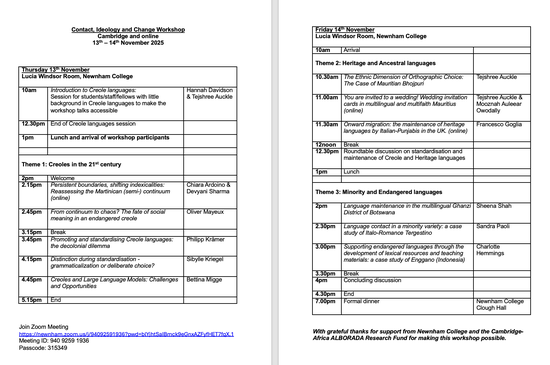
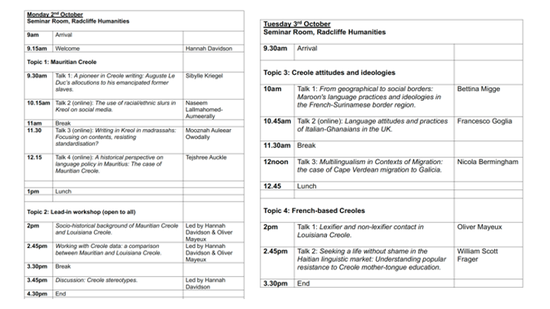
Two-day hybrid workshop with speakers from Mauritius, France, Germany, Belgium, Ireland and the UK.
Study funded by the Cambridge-Africa ALBORADA Research Fund (PIs: Hannah Davidson and Tejshree Auckle, Senior Collaborator: Mooznah Auleear Owodally) Mauritius is an ethnically diverse African island to the east of Madagascar, where people of African, Indian, Chinese and European origin co-exist.
Study funded by UKRI (PI: Dr Rowena Kasprowicz) The Progression in Primary Languages project is a four-year, longitudinal study exploring language learning in primary schools across England, which teach French, German, or Spanish.
Organisation of a hybrid workshop about Creole Multilingualism
Study funded by AHRC In order to compare language attitudes and reported language use expressed in interviews with actual language choices, I use the broad theoretical framework of Communication Accommodation Theory (CAT) (Giles, 2016) as this provides scope to explore how/whether participants changed the way they spoke (either using another language entirely or modifying features of the same language) to accommodate their interlocuter.
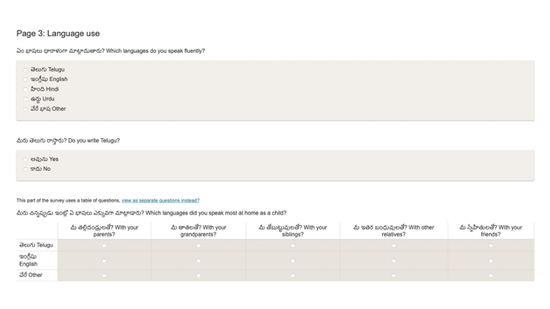
Language attitudes towards Telugu
An investigation of three discourse markers in Mauritian Creole
Language in Mauritius' public spaces.
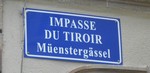
Signs in East Belgium.
Discourse Markers (DMs) are particularly susceptible to borrowing between languages and several approaches can provide a framework to analyse speech in multilingual contexts. This paper examines a structural and a pragmatic-functional perspective: Myers-Scotton’s Matrix Language Frame (MLF) model and Matras’ Pragmatic- Functional (PF) perspective. It considers how DMs fit into these approaches and how they deal with code-switching in Kreol Morisien-French multilingual conversations. As it is rare to consider the same linguistic data from these different linguistic perspectives, this paper explores whether they are competing models or may offer complementary perspectives. MLF sees languages as distinct entities which are switched between, while PF involves context-appropriate selection of components from a complex repertoire. Matras' pragmatic-dominance hypothesis is also explored through correlations with language use. Although the approaches emphasise different aspects of multilingual speech, it is concluded that together they can offer complementary perspectives on Mauritian discourse, despite being conceptually difficult to reconcile.
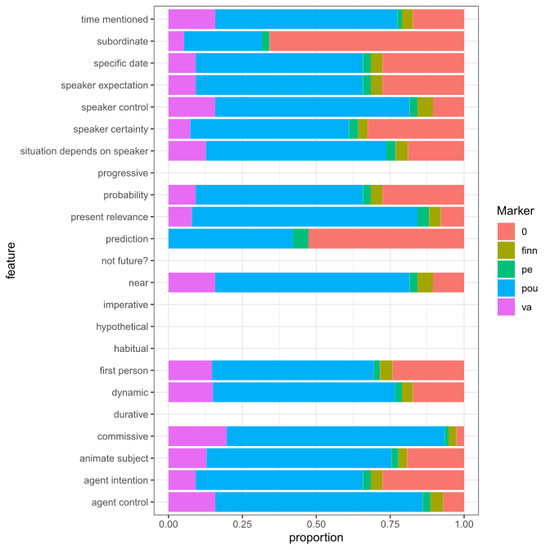
Most research regarding Mauritian Creole future marking was carried out in the 1990s and assumed differences in ‘certainty’ dictated the choice of future marker (Baker 1993; Hazaël-Massieux 1993; Touchard & Véronique 1993). The consensus was that the two main markers, POU and VA, were used for ‘definite’ and ‘indefinite’ future events respectively. However, this distinction was inadequately defined, and although intuitively solid, it could not account for many naturally occurring instances. Davidson (2021) quantified a range of features relevant for future expression and a new obligation meaning of VA was mentioned by some speakers. In this paper, we explore in more detail the POU/VA opposition, considering contexts with different nuances of obligation/necessity and their compatibility with VA. Overall, VA is more acceptable in contexts which can be interpreted as obligation/necessity and it is now not only restricted to indefinite or ‘less certain’ contexts.
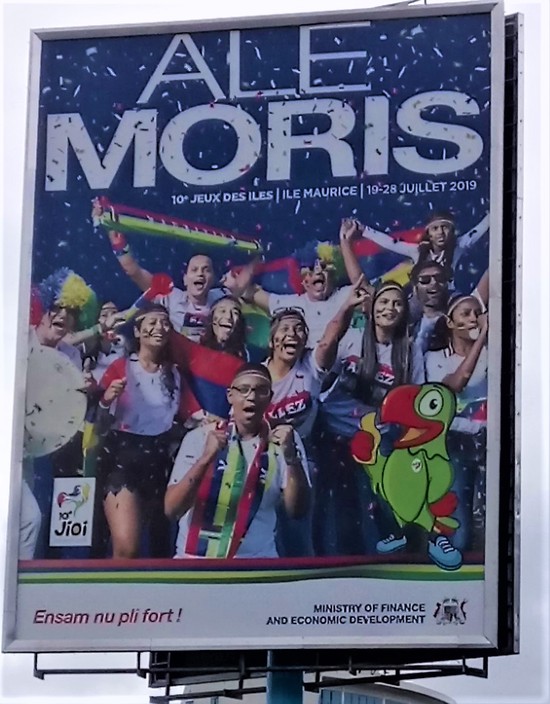
Building on Bosquet-Ballah’s (2015) work, this small-scale study takes both a quantitative and qualitative approach to the linguistic landscape to investigate whether place affects the languages present. Sample areas in Port Louis, the capital, Ebene, a newly-developed business area, and Flic-en-Flac, a touristic village were analysed. English signage was high in all areas (80% signs), French was less visible in Ebene (30.61%) and most present in Flic-en-Flac (57.45%). Creole signage was consistently low in all areas (7-8%). Creole played a metaphorical role in Flic-en-Flac to signal Mauritian authenticity to tourists, but in Port Louis it had a situational function to reach locals. This study provides an insight into Mauritius’ multilingual situation, examining the functions of different languages in public spaces.
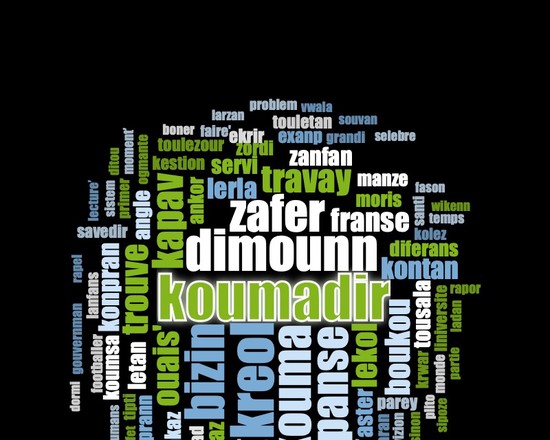
Although the last few years have seen an increased interest in the communicative power of Creoles (cf. Migge, 2020; Rickford, 2019), thus starting to shift the focus away from the traditionally dominant structural and historical research perspectives, pragmatic markers (PM s) in Creoles generally, and Mauritian Creole (MC) in particular, are yet to be studied in detail. A notable exception is Chady’s (2018) thesis, the first in-depth analysis of three types of Mauritian PM s. Starting with a fine-grained description of the functions and uses of the MC PM s dizon, koumadir and savedir in spoken discourse, in this paper we consider the role played by language contact in shaping their emergence and development. We focus in particular on factors such as typological differences between source and recipient languages, intensity of contact, degree of speaker bilingualism, psychological and social links, and time elapsed since initial borrowing.
No single test is robust or exhaustive enough to accurately establish the meaning of tense, mood and aspect (TMA) markers. This article explores the benefits of using canonical and statistical approaches and a variety of elicitation tasks. The testing ground for this multi-faceted approach is past marking in Mauritian Creole. Alongside common methods such as translation and acceptability judgements, data collection also included cloze tests with meta-discussion, narrative re-telling and interviews. Since each task has specific shortcomings, the data is best understood altogether, made possible due to analyzing all tasks within a common framework. The results show that two main past markers (TI and FINN) are generally in complementary distribution, and less common markers (FEK and Ø) broadly pattern with one of these, constituting a novel finding. Adopting this methodology allows for a finer-grained understanding of TMA marking and enables researchers to counteract specific biases associated with individual tasks.
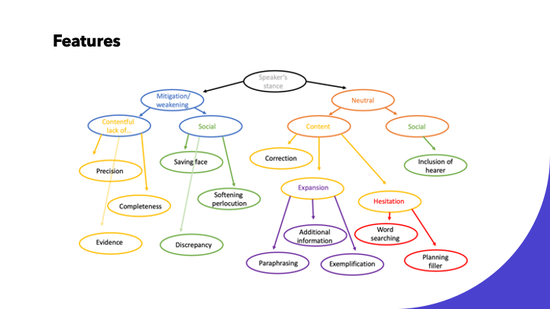
Offering a detailed investigation of three Mauritian Creole pragmatic markers based on one of the verba dicendi, dir ‘say’, in a corpus of spoken discourse, this article sets out to offer a preliminary insight into a category of elements that, to date, is mostly unexplored. By applying a methodology inspired by Canonical Typology, each marker is scored against a set of defined features, identifying their most and least prominent uses, and a detailed and comprehensive description of their functions is given. Reflecting on their synchronic properties, the article also considers their diachronic development and reflects on their very different evolutionary paths and stages of grammaticalization.
Following a series of articles about the status of Mauritian’s future markers in the 1993 edition of Etudes Créoles (Baker 1993; Hazaël-Massieux 1993; Touchard & Véronique 1993) there has been little debate about the division of labour between POU and VA in the domain of future marking. With the exception of the article by Hazaël-Massieux (1993), literature on the distinction between POU and VA in Mauritian exhibits a strong consensus that the choice of marker depends on whether the context constitutes a definite or indefinite future (Adone 1994 : 40; Baker 1972: 109; Henri & Kihm 2015: 261 amongst many others). This article gives a detailed description of how these markers have evolved and interacted over time; more specifically, it shows that the label ‘indefinite’ does not adequately capture the complex nature of VA. Attempts to explain an ‘indefinite’ future in the literature until now are at best vague and at worst inadequate. This paper suggests an alternative way of addressing the issue, following Corbett’s (2007) canonical typological approach, which breaks down meanings into ‘features’ based on assumptions and propositions in the previous research.
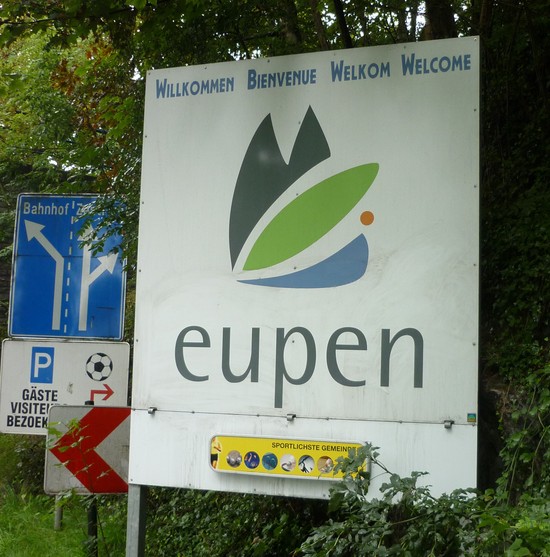
This study investigates the Linguistic Landscape (LL) within the German-speaking Community of Belgium with a focus on the role of French. Through examining the signs present in the towns of Eupen (north) and Sankt Vith (south), it contrasts the linguistic situation, highlighting differences regarding linguistic dominance of German and attitudes towards the use of French or other languages. Quantitative analysis consisted of photographing the signs on the main street of each town and found that German was more dominant in Sankt Vith. The qualitative analysis involved comparing similar signs and collecting interview and questionnaire data. Whilst a reason given for using German in Sankt Vith was pride in the language, similar responses in Eupen drew attention to linguistic conflict, which would have otherwise gone unnoticed had only the LL been investigated. The investigation provided an insight into the multilingual situation in East Belgium and suggests that French plays a larger role in Eupen.
Native
C1/C2
C1
B2 Passive
B2
B1
A2
A2
A2